
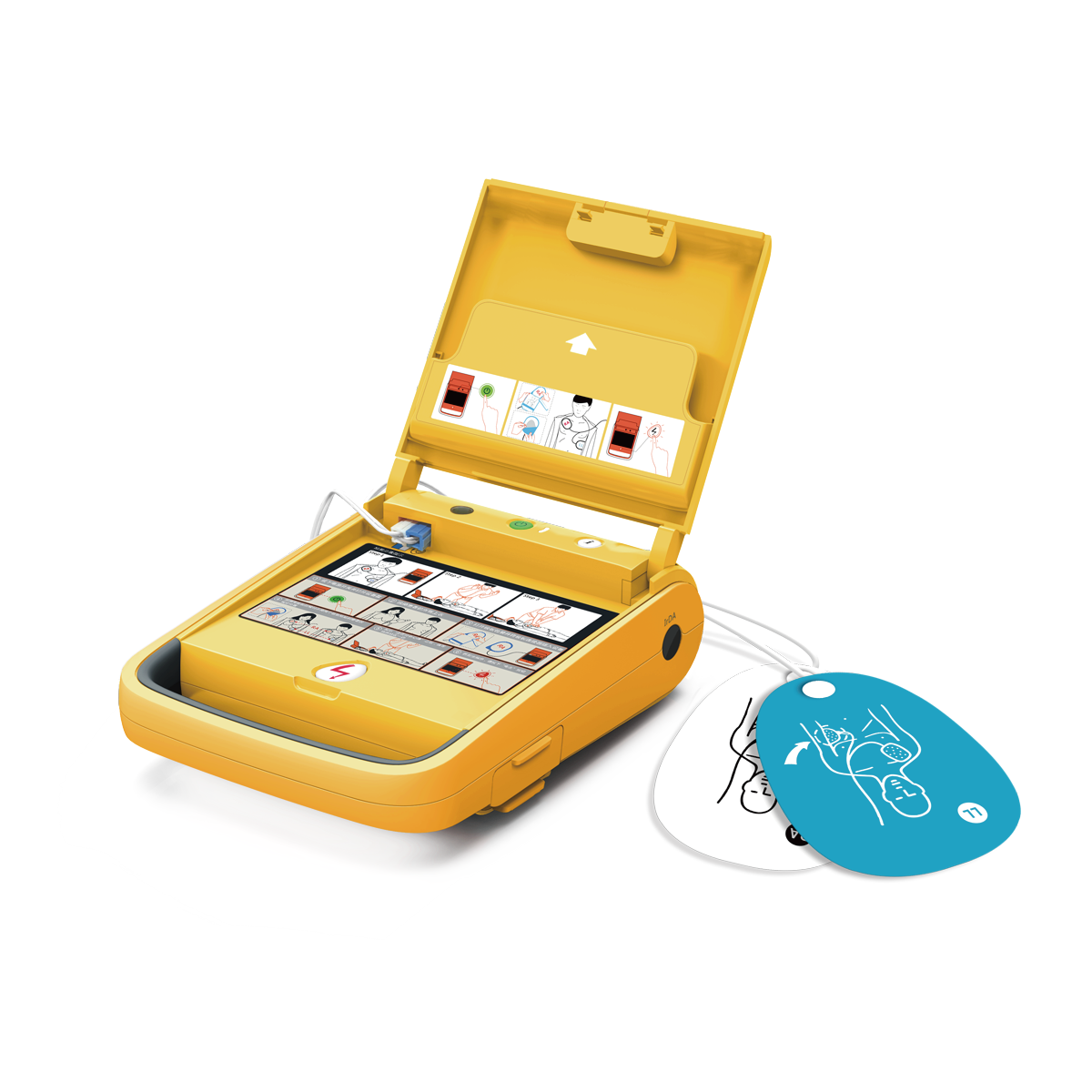
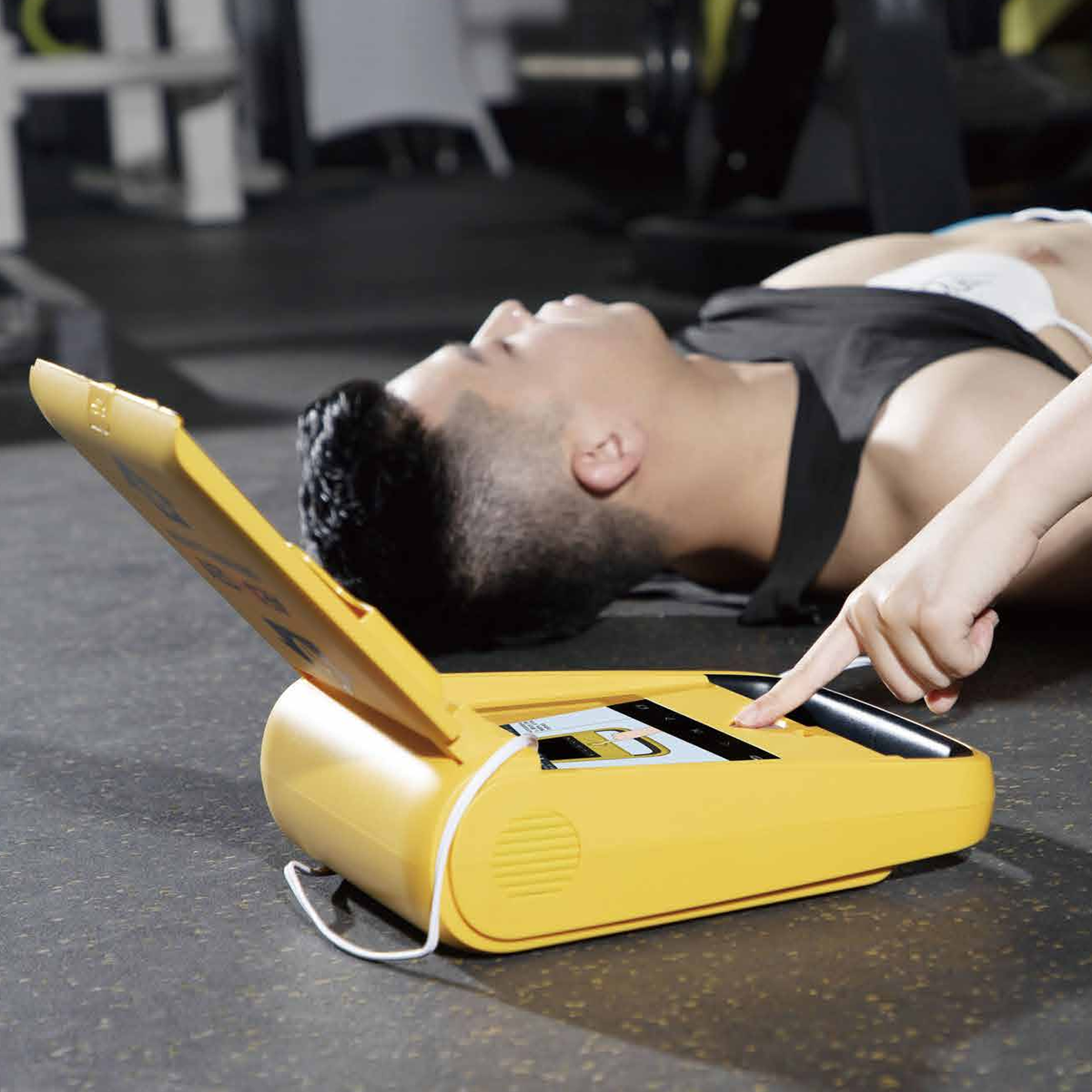
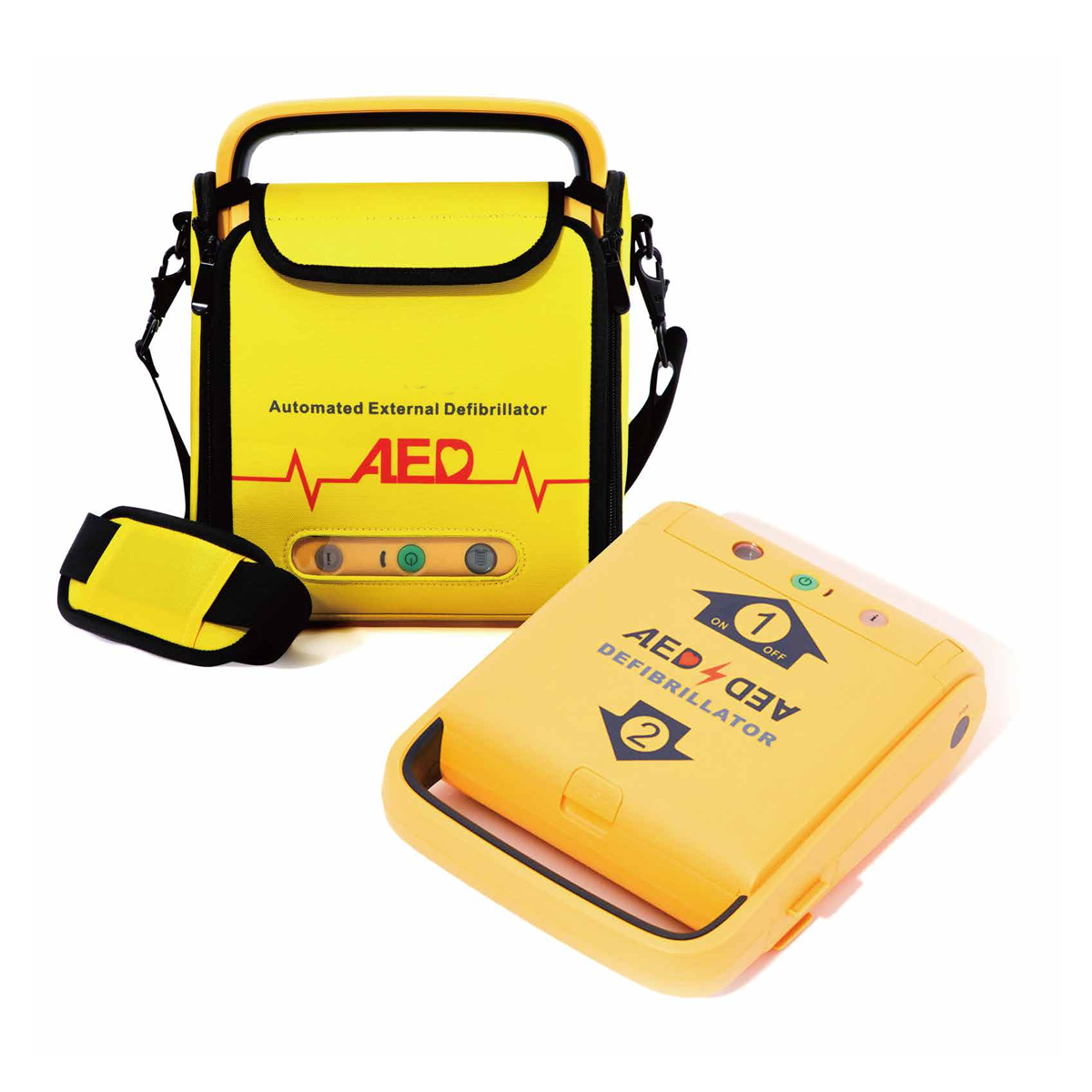
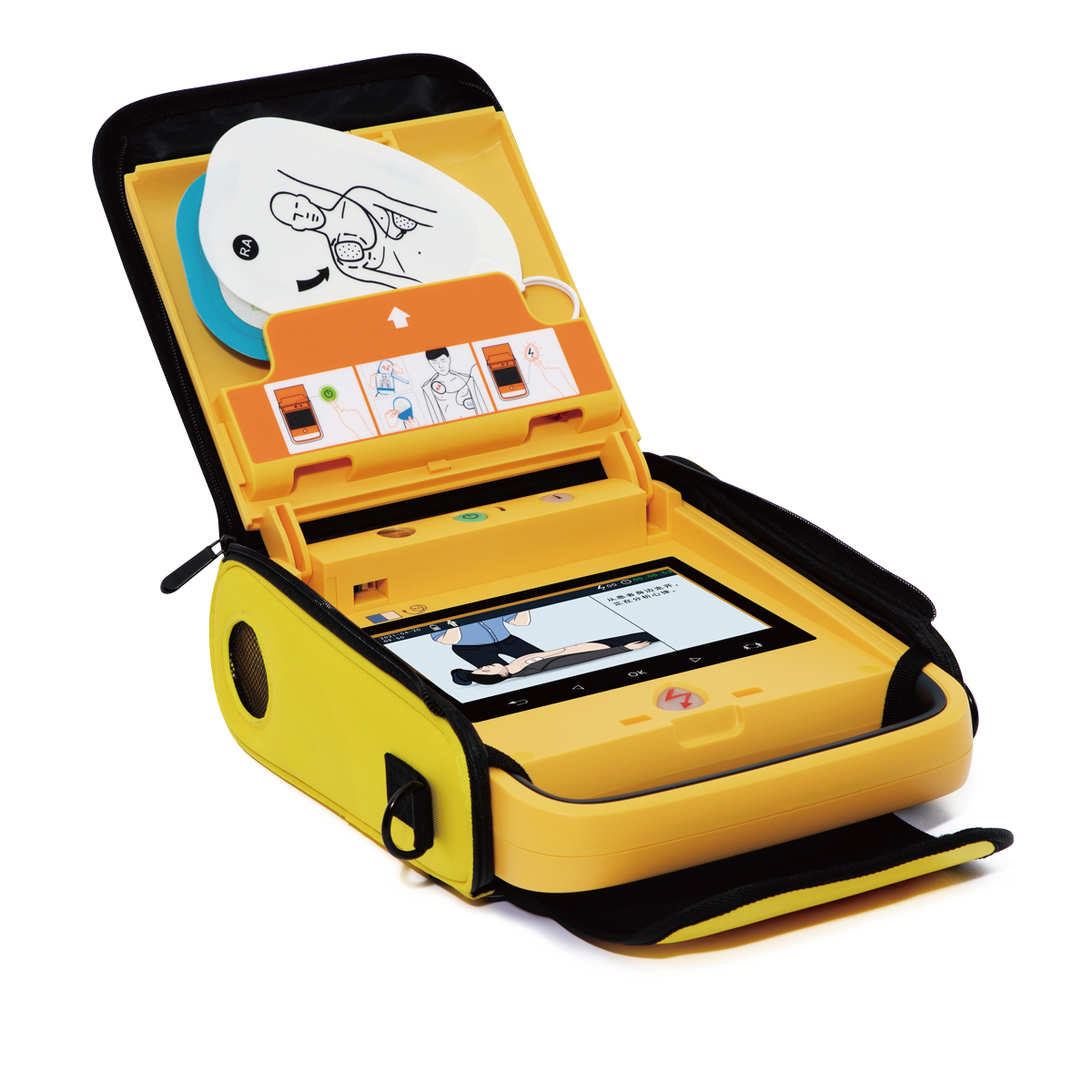
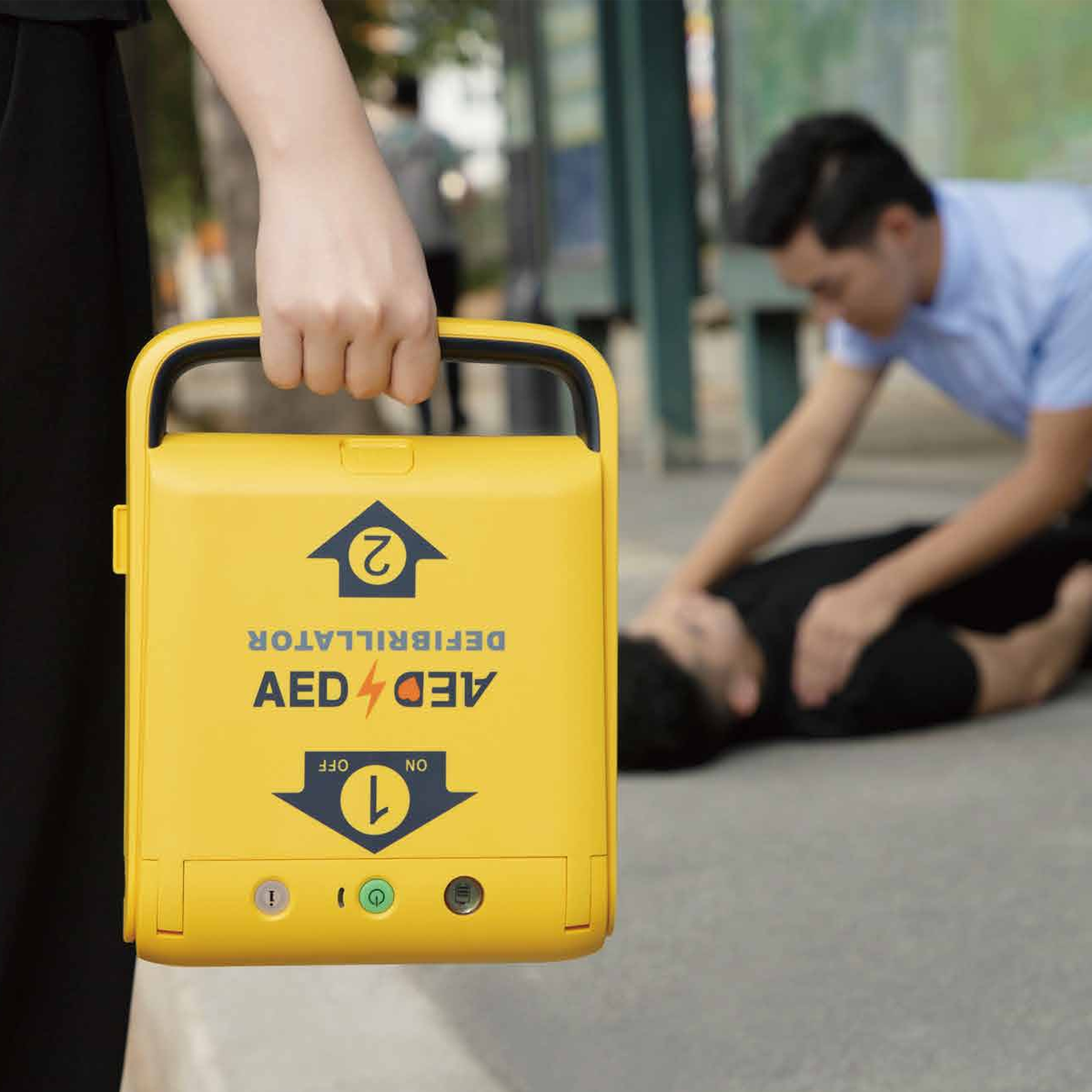
The Semi-Automated External Defibrillator (AED) is a compact, portable emergency device designed to assess a patient’s cardiac rhythm and provide defibrillation when a shockable rhythm is detected. In semi-automated operation, the device analyzes the ECG and prompts the rescuer to press the shock button when defibrillation is indicated, supporting rapid response during sudden cardiac arrest.
Features & Benefits
- Semi-automated operation with automatic ECG rhythm analysis
- Shockable rhythm detection for conditions such as ventricular fibrillation and ventricular tachycardia
- Guided rescue operation through audible and visual prompts
- Dedicated shock button for controlled defibrillation delivery
- Portable, lightweight design for rapid deployment
- Battery-powered operation for use in locations without direct mains power
- Simple, clearly identified controls for emergency operation
- Protective carrying case for storage, transport, and quick access
- Adult and pediatric use may be supported with appropriate electrode pads, depending on configuration
- Designed for rapid deployment in emergency and out-of-hospital environments
Clinical Application
The Semi-Automated External Defibrillator is intended for emergency management of sudden cardiac arrest, where rapid recognition of a shockable cardiac rhythm and early defibrillation can be critical. It is suitable for use by trained responders in hospitals, clinics, ambulances, workplaces, schools, public facilities, and other emergency-care environments. Semi-automated AEDs analyze the patient’s rhythm and require the operator to initiate the shock when instructed by the device.