
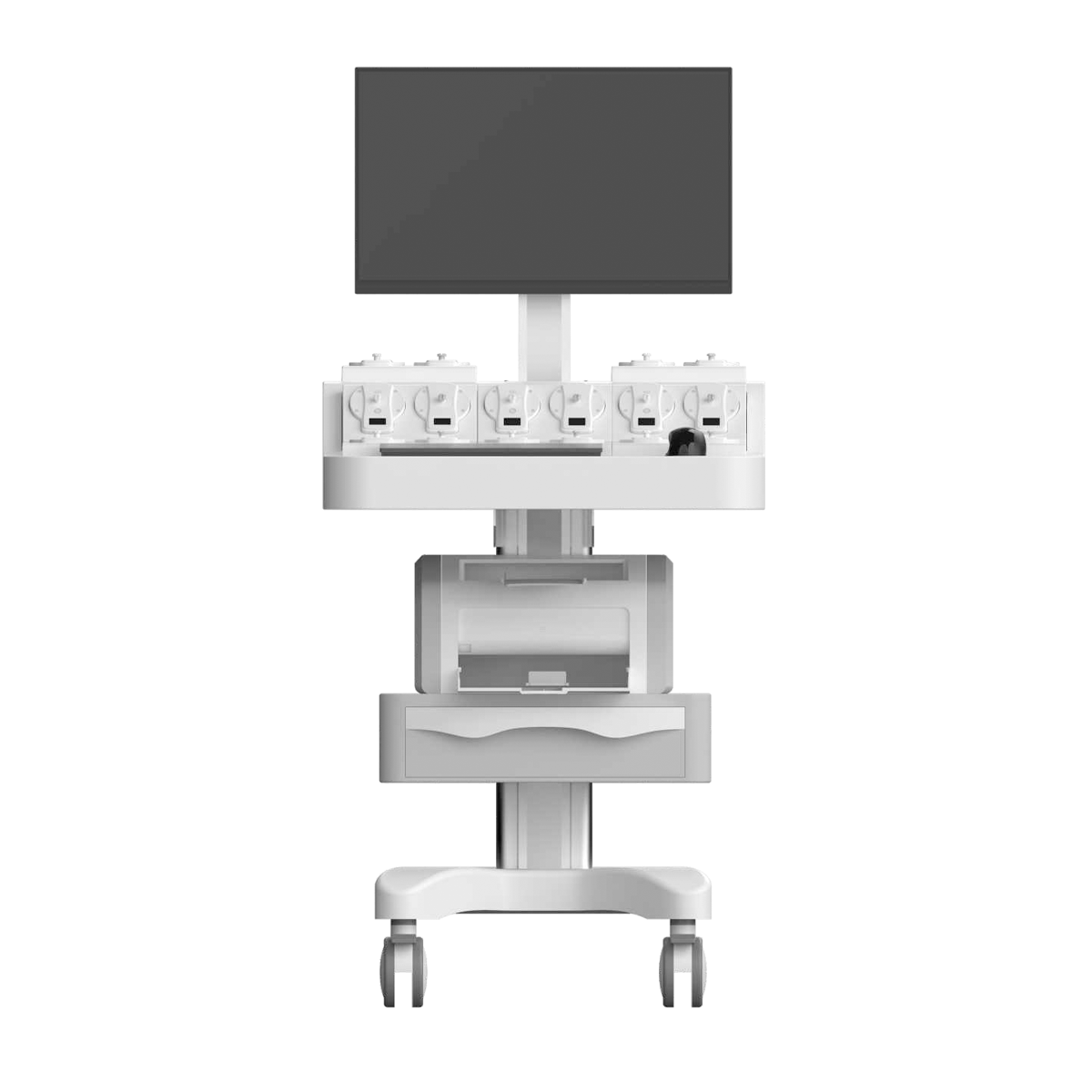
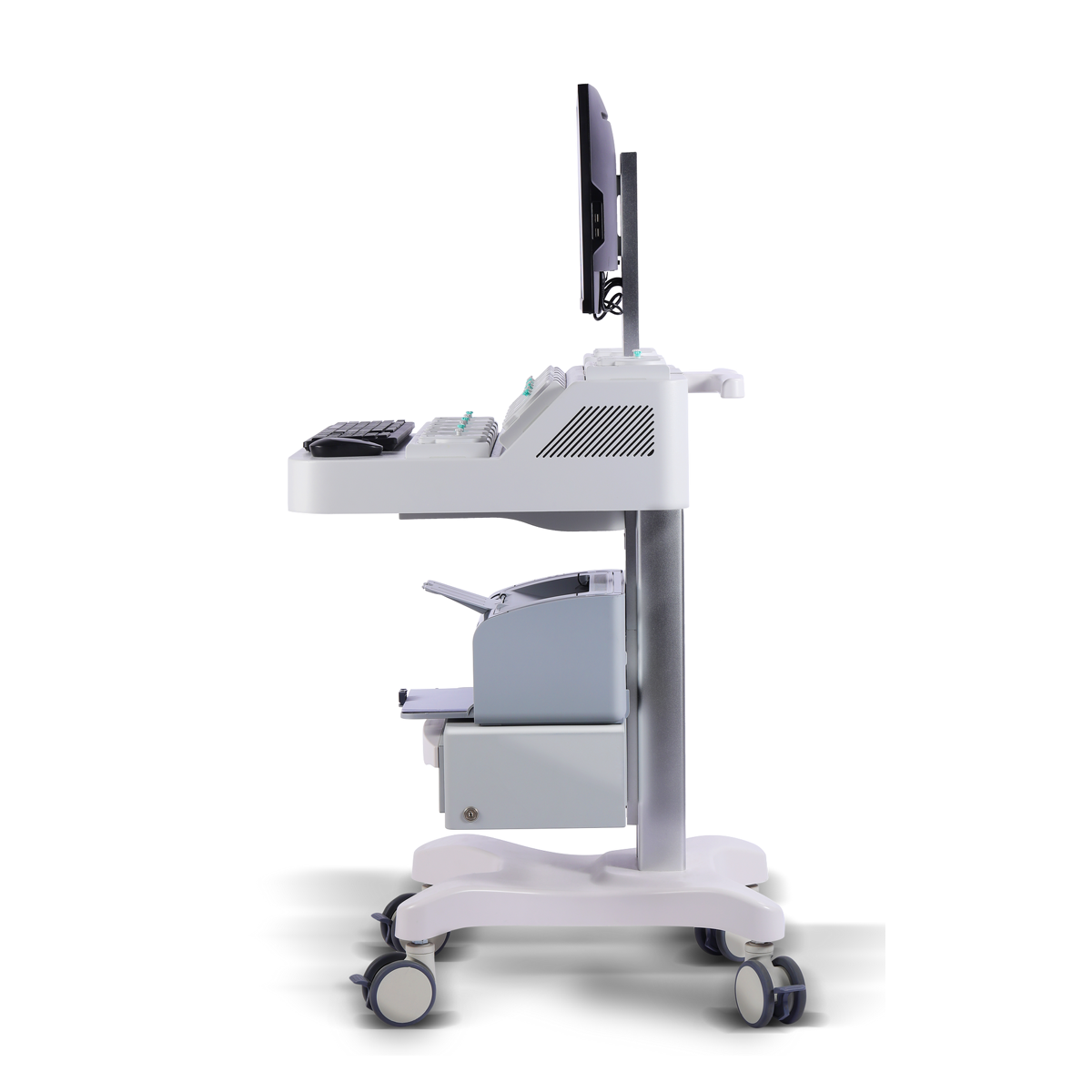
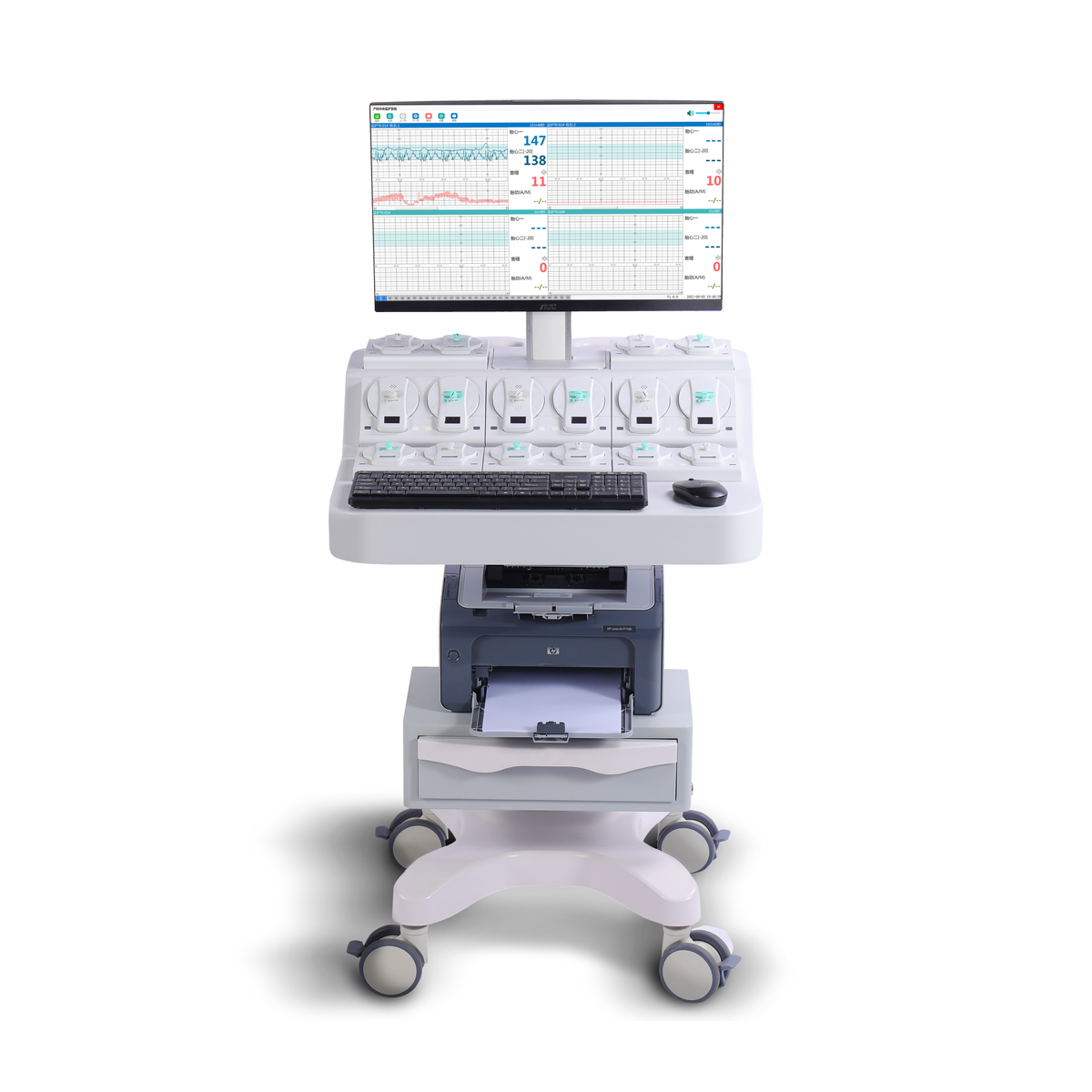
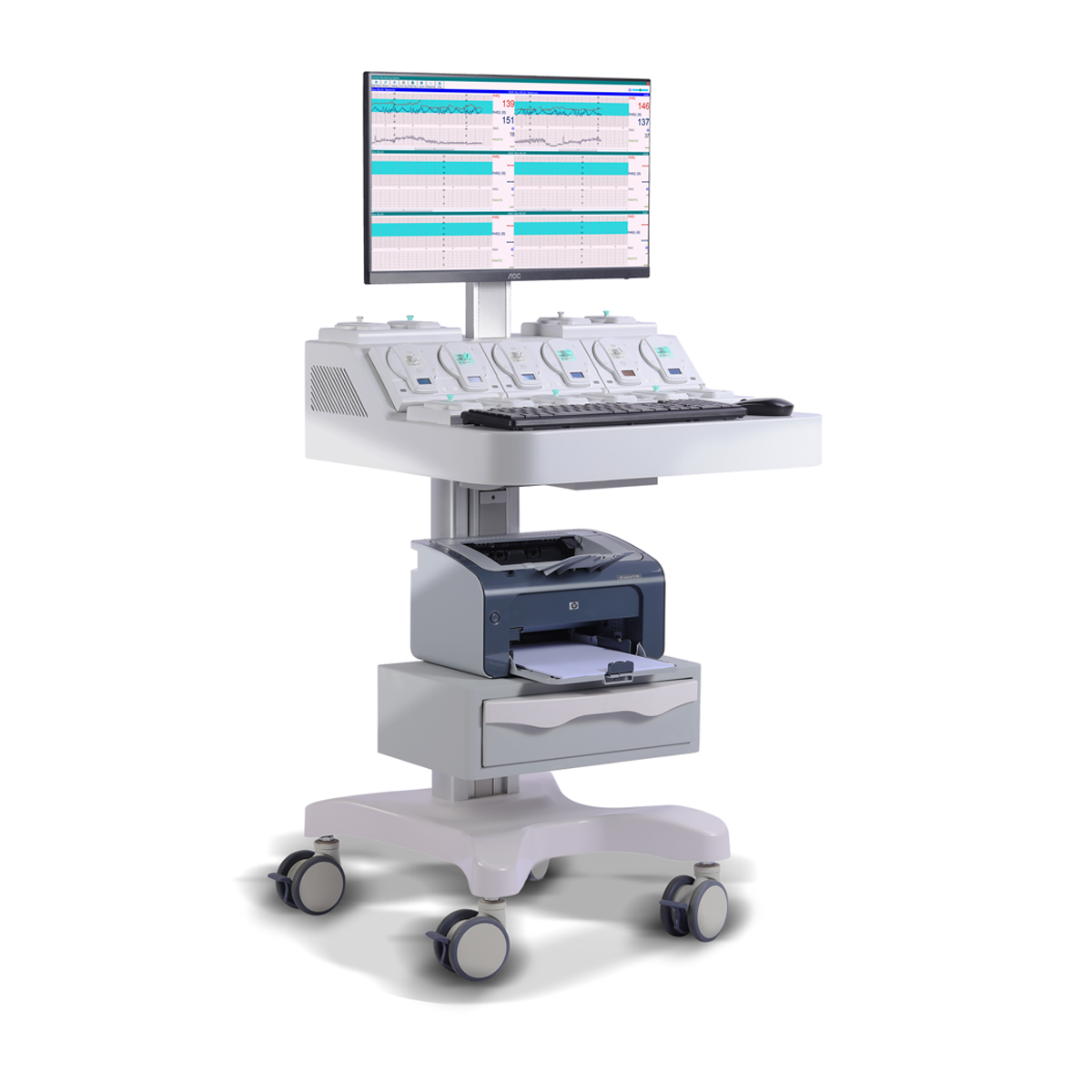
The eCTG-8T Wireless Ultrasound Fetal Monitoring System is a centralized obstetric monitoring solution designed for continuous, wireless monitoring of fetal well-being across multiple beds. It combines wireless ultrasound probes with a centralized workstation to monitor fetal heart rate (FHR), uterine contractions (TOCO), and fetal movement for singleton and twin pregnancies. Its integrated monitoring software provides real-time waveform display, automated CTG scoring, data storage, review, and reporting, helping clinicians efficiently monitor multiple patients from a single workstation.
Features & Benefits
- Wireless ultrasound fetal monitoring with Wi-Fi probes
- Multi-bed central monitoring system
- Supports singleton and twin fetal monitoring
- Wireless communication range of approximately 20 meters in open space
- FHR, TOCO, and fetal movement monitoring
- Wireless probes with built-in high-resolution color displays
- Probe display can show patient name, battery status, and bed number
- Built-in speaker in probes for real-time fetal heart sound
- Large-capacity rechargeable Li-ion batteries
- 3-bed, 6-bed, or 9-bed monitoring layouts
- Automated CTG scoring, including Fischer, Krebs, NST, and ACOG scoring
- Real-time waveform and numerical data display
- Patient data storage, review, search, and playback
- Alarm/event recording
- Integrated medical-grade computer and high-resolution display
- Integrated A4/B5 automatic-adjustment printer
- Supports HIS and EMR integration
- Centralized monitoring and management of multiple patients
Clinical Application
The eCTG-8T is designed for obstetric and maternity care, particularly in antenatal clinics, labor and delivery rooms, maternity wards, and obstetric monitoring units. It is used for continuous assessment of fetal heart rate, uterine contractions, and fetal movement before and during labor. The system supports non-stress testing (NST) and monitoring of singleton or twin pregnancies, while its centralized wireless architecture allows clinicians to observe multiple patients simultaneously without restricting maternal movement with conventional monitoring cables.